The phrase, “Sloppy Craft”, the title of a recent panel discussion and a forthcoming exhibition at Portland’s Contemporary Crafts Museum, had to be checked out. Whatever could it mean? How could the Contemporary Crafts Museum have been drawn into featuring sloppiness? What kind of provocation was intended by the title? What are the implications of honoring such a concept as sloppy craft for art as well as craft? Tell me more, tell me more.
A bit of background: when I was working textiles, I regularly engaged in a “discussion” with quilters (some traditional, some contemporary) about whether the stitching work done on my textiles ( specifically in construction and quilting) should strive for perfection. I always maintained that my goal was “competence.” My attention was entirely on the image and impact (on, I maintained, the art). The craft was there only to hold it together and/or to add to the art. Hence my seams were not necessarily straight and the back of the art was decent but not flawless (I didn’t bury my threads, for example, simply tidied them). I used the quilting stitches as part of the design, which meant that they were generally not even in length and that they were heavy in places and light in others; this can make the quilted art hang wonkily, requiring heroic measures to make it perform well.
This is an example of a old piece of mine that I claim has “competent” craft:
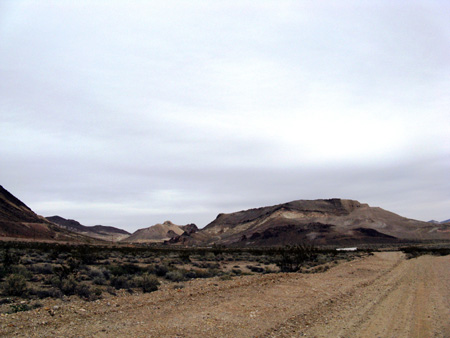
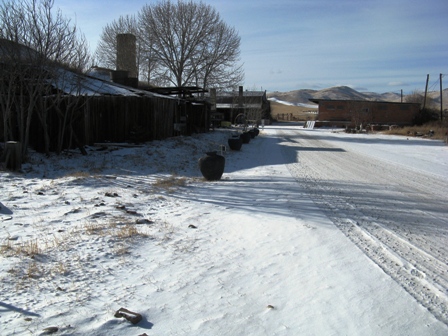
In a few months, I’ll be back in Nevada, tackling the Amargosa Playa again. This time I want to do a set of painted panels, five 5×5 foot ones (25 horizontal feet). I have various notions of how this might work out in paint, but will have to wait until I get there to see what actually happens. I also want to do something similar in textiles, perhaps only some preliminary image making, saving stitching for when I return to Portland. But I am mulling over both projects in my mind, trying to think how I might work them.
I just read a blog entry (dated August 17) by Jenny Bowker, who is an art colleague who works in quilted textiles. She tackled the same kind of landscape and had the same kind of hopes about what she might evoke, with some additions that the Amargosa doesn’t have: the presence of a handsome driver and some marvelous land forms. Her blog entry, which finishes with the photo of her textile work, is worth reading for sheer pleasure. But it makes me somewhat nervous about my ambitions.
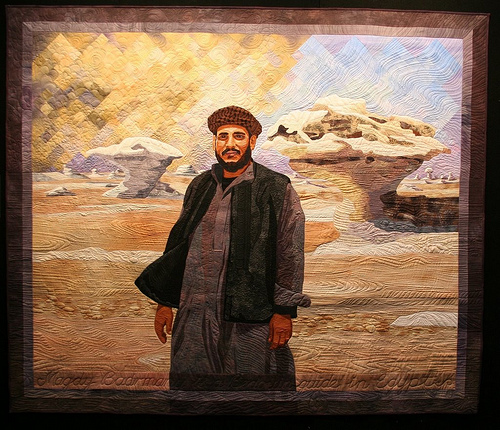
Here’s the photo of Jenny’s artwork, which won a prize at the Canberra quilt exhibit and, I’m sure, will be seen often at other places around the globe.
Jenny Bowker, Sandstorm over the White Desert, about life size (see her blog entry for scale)
And here is an photo or two of what I will be facing, again
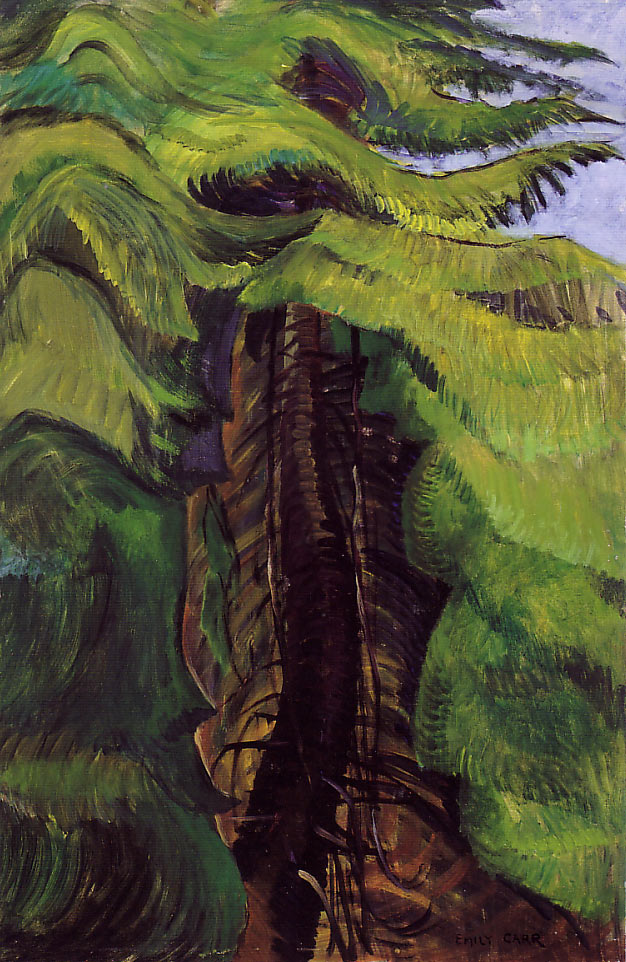
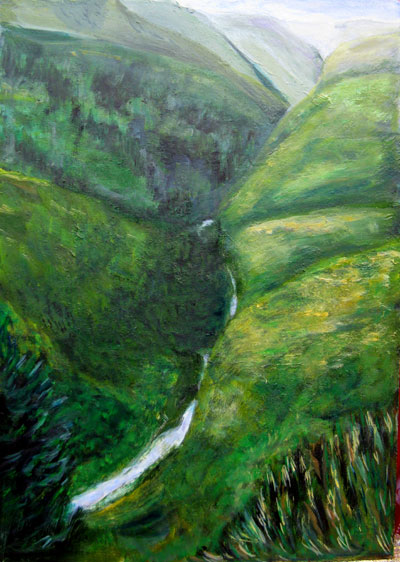
Some of you already know that I’ve been copying Emily Carr paintings for the last week or so, attempting to understand more fully how she does forests and trees.
I’ve learned a lot through this exercise [ including the rule that I must paint-over or otherwise destroy the copies I’ve made before someone comes into the studio and exclaims with pleasure over them. Such an exclamation forces me to admit that what the complimenter is seeing is a copy, causing embarassment all round.] Carr’s finding of shapes in the complexity, of making color within the shapes, and of “draping” her branches are all valuable for my own art-making thoughts.
However, during this process, I had other kinds of questions occur.
I read a post last month on Slow Muse that linked to a video of a TED talk by author Elizabeth Gilbert. I highly recommend it (and if you don’t know the TED talks, please browse among the many fascinating offerings, all under 20 minutes). Not only is Gilbert an engaging speaker, but she touches on a subject close to the heart of many artists, whether they think about it much or not: the nature of creation.
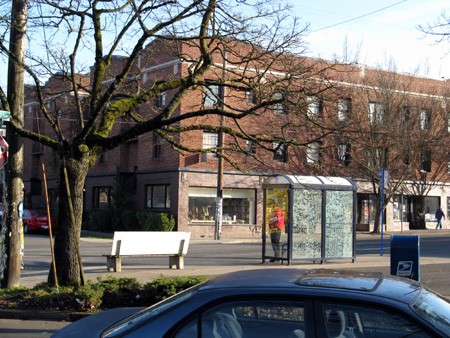
At the request (advice/direction) of my oil painting instructor, Jef Gunn, I have gone out on the streets of Portland to paint. Luckily the weather has been relatively decent, although cold if one is catching morning shadows. But the experience has put me in the midst of the community, and a grand experience it has been.
I am discovering that one of the most fulfilling aspects of painting is having the casual onlooker weigh in, discuss the weather, make silly comments or just say “hi.” I didn’t realize until the Basin experience how much having a bit of interaction with the community could mean to me. The Portland pleine aire work that I’ve been doing verifies that social contact enhances the pleasures for me of slapping color on board, smooshing substances around until they come to mean something, and personal ruminations about the view.
On a windy frigid Wednesday this week, Jer and I visited the Archie Bray Foundation in Helena, Montana. The visit was frigid, fascinating, and raised some internal questions for me.
The Archie Bray is a ceramics workshop, foundation, and clay business, started by a brick manufacturer who was fascinated by art ceramics. According the website, the Archie Bray was founded “in 1951 by brickmaker Archie Bray, who intended it to be ‘a place to make available, for all who are seriously and sincerely interested in any of the branches of the ceramic arts, a fine place to work.’ Its primary mission is to provide an environment that stimulates creative work in ceramics.”
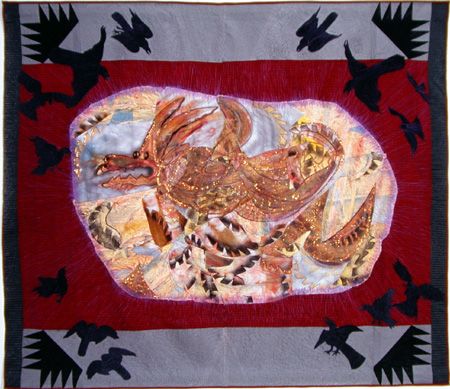 Sophie, Emerging, 84 x 73″, 2002, Materials: hand-painted cotton, canvas, silk, stretch-polyester, felt. Methods: hand- painted-and-dyed, airbrushed and commercial fabrics. Machine stitched.