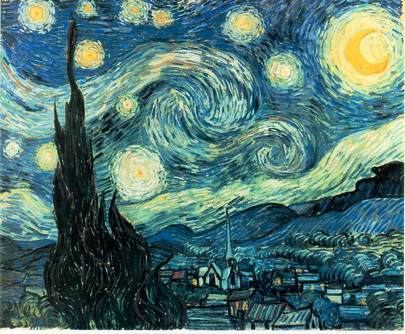
It’s not much of an observation to say that a lot of artists are crazy, but it’s interesting to observe that few successful ones are.
That is contrary to commonly held myths about artists. That’s what makes it interesting.
It was my recent experience on Whidbey Island that prompts me to say this. I met a lot of successful artists there. They were successful on every count. They were doing exactly the art they wanted, and they were making decent money.
By “decent money” I mean over fifty thousand a year. Of course, that’s not a lot of money in terms of what it takes to own a home and raise a family in many parts of the US, but if you’re able to live where the real estate is not too expensive and you’re reasonably thrifty on top of that, it can be done. Many people manage on less. Most of the pro artists I met on Whidbey were doing much better than that.
But what struck me about that Washington group is something I’ve noticed again and again in other places with other publicly successful artists. They were not just calm and friendly people, they were genuine social adepts. These people were all highly tuned to their audiences; indeed, what was singularly remarkable was not their ferocious independence but their sense of community with the human race.
I don’t know if we can thank Freud for the notion that neurosis is helpful to an artist, but that notion does not accord with my own experiences with artists.
I look at the crazy ones with their messes and incomplete projects compared to the order of the power studios; I look at the nervous smiles of poor sellers compared completely natural engagement of the big sellers, and I know.
I’m on to something.
So to complete the list of why artists don’t make it we have:
1. The art is technically inferior.
2. The message is either boring or disagreeable.
3. The artist does not even try to sell.
4. The artist does not produce enough.
5. The artist wants too much money.
6. The artist is crazy.
The last undercuts them all.
Freud was wrong. Success in the arts is directly proportional to sanity.
The best and most successful artists are some of the sanest people you will ever meet.
Of course, one might ask, how is it, exactly, that craziness reduces one’s chance for success?
I can think of a recent example from my own life in which I tried to help an excellent artist but was rebuffed by insane suspicions about my intentions and unprovoked attacks on my character.
A guy can only take so much.
But that’s something crazy people do. They live life like it’s a script for suicide, and so they always make wrong choices at critical junctures — like ruining friendships by failing to understand social boundaries.
How does one handle such people? I genuinely want to learn because it’s obvious to me that a lot of artists are troubled beings, and if they could just get it together socially, they’d have so many more chances to win.

Rubens was an example of a highly socially adept and highly successful artist. Raphael was highly social. Michelangelo is reported to have had an anti-social personality, but his dedication to his projects was evident to his patrons and they discovered how to work with him.
As to how to work with an excellent artist with social difficulties, that seems like it would be an art form in itself, Rex. If you tried to work with someone you believed in but found difficult, you shouldn’t see failure as a reason to give up in general.
The details of your recent experiences are none of my business. From your brief comments, it seems you might have gone wrong by trying to act as a sort of business agent in the context of a personal friendship. Perhaps by taking on a more formal role of agent you would have better results next time.
As for dealing with suspicions about your intentions, the best thing to do is to develop a record as a successful “agent” or “helper” or whatever you want to call yourself. If the artists you want to work with can talk with others you have helped, it would develop trust.
David criticized me earlier for criticizing post-writing style. I’ll risk David’s censure here and comment that if you want to work with crazy artists, a good place to start would be to stop calling them crazy.
Besides being a loaded word (I suspect Rex was being deliberately provocative) crazy is probably not the best descriptive term. However, granting Rex’s observation that there are a lot of “socially challenged” artists, and assuming further that the proportion is higher than in other fields of endeavor, one has to ask: What’s different about art? One could say it requires passion, but I think the same is true in business or science or whatever, at least if one wishes to excel. What may be different is that an artist is attempting to sell or gain acceptance for something much more personal, and the psychological risk feels much greater. Though most everyone experiences rejections, maybe artists take these more personally and are more apt to have difficulties in uncertain social situations. It’s just a working theory — does it make sense to anyone? I could also see that precisely because artists are more personally engaged, they have better relationships within their circle of connections.
Steve,
I think you have exactly the right take on this issue. There are lots of anti-social and nutty scientists, but they make constructive contributions to their fields of research. The fact that science is (supposed to be) about discovering external truth, rather than personal interpretation is probably the key. The artist, exploring an inner vision, is inherently in a more vulnerable position. You can say to I scientist “Your work sucks” and it will make little difference, if the work is powerful in the sense of providing useful knowledge. But there is no object defense to “Your work sucks” for an artist.
Rex,
I am unconvinced by the idea that ‘artists’ (however defined) are more ‘crazy’ (however defined) than the general population.
I know it is a part of common wisdom that it is so, but have you seen any evidence outside of anecdote?
As to the notion that it is only the non-crazy ones who are successful… I think that your highly selective definition of successful leaves out the many non-crazy people who do art in their own way, and on their own terms, fitting it in with the rest of their own life.
There is an interesting question here, I think, and that is how we got to the point in common mythology where doing art requires someone to be special in some way. To be crazy special, one might say.
I haven’t found artists to be any crazier than anyone else. Have you ever hung out with a bunch of accountants? Now those people are crazy. And I heard somewhere that dentists have a disproportionately high suicide rate. Artists seem to have about the same range of sanity to insanity as people in other professions.
What I do think exists is the myth of the crazy artist. Vincent was a great painter, but I’ll never forgive him for that stunt with the ear. He made it harder for the rest of us. Most of the artists that I’m friends with are pretty together. Smart, focused hardworking people, with great senses of humor (not all artists, but the ones I choose to hang out with).
Then there are wannabe artists that put a lot of effort into living the myth. They make sure they dress like artists (or how they think artists dress). They act theatrically eccentric in public. They have tantrums. And occasionally they might actually do some painting. They want the lifestyle, but don’t want to do the work. You can really see this phenomenon in the music world. They’re all over the place here in L.A., kids that look like they just walked out of MTV. Sometimes you’ll see one banging away on a guitar, and they can barely make it through a song. But they look like rock stars.
Karl,
Thanks for your thoughts. Formalizing a relationship is good advice. Qualifying my associates is advice to myself. No, I do not want to work with crazy artists. People who need too much attention are a drain in any context.
Sometimes Karl, I really have little sympathy for “artist’s woes.” I know I should use “nicer” language, but pretending to feel sorry for willfully destructive characteristics is just a little too much. The guard dog comes out in me.
Steve,
As which definition of “Crazy,” I provide sufficient context in the post to indicate that I’m referring to the kind that is commonly described as “dysfunctional.”
Also, I elaborate a little bit more below.
Colin,
David answered many your question for me. Thank you David. Your experience accords with mine.
I do not think that artists are on average crazier than the general population, and nowhere in my post do I suggest that; in fact, I suggest the opposite.
In other professions, because there are set rules of workplace conduct, many dysfunctional people can get by. In the arts, with all their freedom, a lack of sane, self discipline is particularly destructive. There are fewer restraints, and there is the myth that neurosis is useful to the artist.
Limiting the context of “success” was intentional. It avoided that whole “What is success?” distraction. If you’ve followed my thoughts on other threads, you’ll know perfectly well that I don’t regard the definition I used here as the only true one.
I do find it odd that I’m always called to defend that though. I mean, a scientist or author who never published or a stone mason who never built rock walls for other people would none of them be regarded as either scientists, authors, or masons. Why do artists get all this special treatment?
I’d like to add that I run into the myth of the crazy artist more when I’m dealing with non-artists than with artists. Most serious artists know that it’s bullshit. Much of the non-art public, however, totally buys into it, probably from watching too many movies-of-the-week. But then that probably makes sense. I mean, where’s the entertainment value in watching someone go to their studio and paint, or run around with a camera shooting photos? A movie about my life would be about as exciting as watching grass grow :)
Rex,
Yes my comment crossed with David’s on the wires.
I do find it odd that I’m always called to defend that though. I mean, a scientist or author who never published or a stone mason who never built rock walls for other people would none of them be regarded as either scientists, authors, or masons. Why do artists get all this special treatment?
That’s an interesting question. I think that the issue here is one of a self defining label. A stone mason isn’t a stone mason unless s/he is employed as such. Whereas anyone can say that they are an artist…..
I’m one of those crazy accountants that David likes so much :-) Except that I’m not any more, because the label ‘accountant’ has a defined meaning and I no longer pay the subscription.
Oh, and I’m sorry if I misinterpreted you, but your first sentence:
It’s not much of an observation to say that a lot of artists are crazy….
did make it sound like you were arguing from the position that artists were crazy.
Rex,
If you want to explore the topic beyond your personal experience, look at the book: “Touched With Fire” by Kay Redfield Jamison. She actually conducted studies on artists and poets with Bi-Polar Disorder.
Like others have mentioned, I would stay away from the word “crazy,” even if you are purposefully using it to be provocative. It feels generic and undescriptive. If we are talking about Van Gogh, we are clearly talking about mental illness. But if you are talking about socially inept people, dysfunctional people, I agree with others that artists do not have the corner on that market.
I guess my personal opinion is thank goodness for folks who don’t quite fit in with social norms, who may have trouble marketing themselves, who may be interpersonally difficult. They provide variety and interest in my life and often make damn interesting work.
You write: “Limiting the context of “success” was intentional. It avoided that whole “What is success?” distraction. If you’ve followed my thoughts on other threads, you’ll know perfectly well that I don’t regard the definition I used here as the only true one.”
Hmmm…Distraction? Not really. Because if we acknowledge there are different kinds of success, your argument falls apart, right? I don’t mean to put you on the defense, but this probably will anyway. My general impression from this posts and others is that you have a certain amount of disdain for artists who don’t sell, or “make it,” or even try to “make it.” That phrase by itself implies there is one way to “make it” and otherwise you don’t – a very Darwinian point of view. If there are different ways to be an artist, who decides who “makes it?”
As an artist and the son of an accountant I’d suggest that artists are definately a bit more away with the mixer than the accountants,(for a start off an accountant would never have written that). My experience has been that the arty people are emotional right-brain biased, whereas the accountants are mathematical left-brained biased. An interesting thing I noticed was that if my father said he liked a picture it always, without exception, turned out to be a commercial failure, and if he disliked a picture it was always commercially popular.
What I wanted to ask you though was what you’re meaning by successful? I think Van Gough only sold one picture so was commercially unsuccessful, but now he’s regarded as one of the most famous artists there’s been, and I think it’s for his art as much as his cutting off an ear type stuff. As always I could be wrong!
Interesting, very interesting… Kind regards
Colin,
Cool.
Leslie,
I’ve read “Touched with Fire.” I found it in a college library where I worked, and I must say, though I found the examples of the English poets fascinating, the book was not very scientific. It started off with an assumption, then selected examples to “prove it.” It’s not even a very logical, and it uses a lot of really fluffy language to make tiny, tiny points.
And by “distraction,” I meant that it was a different topic, not an unworthy topic.
And it’s true I have a certain disdain, but it is for posuers. David did a much better job of describing them than I have.
But “crazy,” was, of course, a button word. I just like the ring of the title better that way and used parallelism for stylistic reasons throughout the post (knowing I’d probably be rightly admonished. :)
John,
I used Van Gogh’s picture because he’s such a great example of such a beautiful soul who went so wrong. His story’s tragedy is something I’d like to see other artists avoid. HE certainly did not regard himself as successful.
emiliohm,
Welcome.
R.
I take exception to this. Pro artists and Power studios?
By your standards stated above, I am a woefully unsuccessful artist and I am probably even a bit “crazy”, but I work hard and I am often happy.
And I accept your earlier apology for calling me a “troll” when rebuking my advice.
I don’t think “craziness” automatically translates to failure as a professional artist. Good social skills are certainly necessary, and many people with mental disorders (Asperger syndrome, for example) do lack them, but being “crazy” doesn’t have to mean one has a repellant personality (with which it’s impossible to succeed in any field). “Craziness” can also manifest itself as charisma, which is helpful to one’s success.
Additionally, I do think a certain amount of neurosis is helpful to artists, as long as they can pull it together and act professionally when needed. (Indeed, “neurosis” is distinct from “psychosis” in that it doesn’t interfere with the patient’s ability to function normally.) Anxiety, depression, obsessiveness, and phobias are all neuroses which can inform and enhance an artist’s work.
As for the question of how one relates to a person with extremely poor social skills, I too would very much like to know. So far my strategy has been to avoid them.
I have always hesitated in calling myself an artist of any kind. If it be a writter or artist. Your post and comments makes me hesitate to label myself even further. I enjoy creating art and writting. I have never sold a piece though I have been asked to paint a few. I have never published a written work either. I can see that you would carry great disdain for someone such as myself who dosn’t market their work. Keep in mind though that some of us do it not for the money or the glory, but more because we enjoy it so very much and we love the feeling of giving something that we have created to another. I recently sent one of my paintings to a friend of mine overseas and she loved it. To me that is the greatest payment of all. The definetion of words sometimes differes for each person. For me the definetion of successful would be having my friends enjoy my work and knowing that my paintings will be going to someone who truly appreciates it. Please know this is not an attack on your post or your thoughts. I enjoy your post a great deal. This is just a thought I wanted to share.
Now my chip in the sauce, ok, I am called an artist but I say I call myself a painter. I do notice that spending a considerable amount of time painting using my observation and imagination does make me a bit crazy, but a good crazy.
I started to draw at 2 years old or younger, can’t even remember. I had a need of making art much bigger than anything else. As a kid growing up I never even though about making money with making paintings just happen naturally.
Now about being crazy, I worked in an office for 4 years and that drove me insane, I notice myself drawing in the desk or sketching over very important documents unconsciously… ops I didn’t really mean honestly. I stared at the window frequently and kept dreaming away and talking nonsense so work colleagues did see me as a bit crazy.
In reverse order…
wolfbaby,
You’re not posing. You’re being honest. I keep mentioning David’s comment, but here I’ll quote:
And
Julia,
I totally disagree that insanity adds to charisma or that nuerosis is useful to the artist. That’s a terrible thing to buy into. I am always suspicious when this idea is promoted. What behavior are you trying to justify?
D.
“Pro artists and power studios” means highly productive people and orderly arenas. These don’t mix with nuerosis. My observation. But then, I am of the “Look, don’t listen” school of investigation. People lie. Statistics, when they measure tangible results, speak for themselves.
R.
When Thomas Kincade says: I am doing exactly what I want, I believe him but I think he is talking about the money.
“What behavior are you trying to justify?”
That’s pretty mean spirited…
People experiencing mania or hypomania can sometimes appear highly charismatic. For example (from the previous link) “People with hypomania are generally perceived as being energetic, euphoric, overflowing with new ideas, and sometimes highly confident and charismatic, and unlike full-blown mania, they are sufficiently capable of coherent thought and action to participate in everyday activities.” I don’t think Julia is trying to justify a behavior, but simply making a not-so-controversial observation.
Julia, you say “Anxiety, depression, obsessiveness, and phobias are all neuroses which can inform and enhance an artist’s work.” This sounds like a reasonable observation to me. Rex disagrees with you. What are you basing your statement on?
D.,
I’ve met Tom. He’s a pretty earthy guy. He keeps doing these humble little scenes, like some of the sweetest plien aire you ever saw, but these don’t sell like his nostalgia or Americana stuff. Next time I see him, I’ll ask him how he feels about that. I’ll bet his personal favorites are not the big sellers.
Leslie and Karl,
My bogometer got pegged. Doesn’t seem like a reasonable observation at all. Sounds like a repeat of someone else’s bad observation. I am challenging that. I think people gravitate to the crazy artist myth because it serves to justify their own neurosis. My observations of others show this time and again.I think that’s why Freud said it. Reading his journals is a trip down a very freaky road.
Was it cruel to say so? Well, it is crueler to perpetuate destructive lies. Why do people let that go unchallenged? Saying it’s OK to be nuts because you’re an artist is beastly.
So yes, how does that serve you?
I’ve written a companion piece to Rex’s article (not a disagreement….not an agreement) which I’ve posted to Photostream as it actually longer than the original.
Colin,
Thank you for your companion piece. Very thoughtful.
Rex,
“Saying it’s OK to be nuts because you’re an artist is beastly.”
First of all “nuts” is a worse and more insulting and childish word than “crazy,” but I guess you are just perfecting your identity as a provocateur. At the risk of sounding catty, who is trying to justify their behavior now?
Rex,
What part of my post are you disagreeing with? My observation that “insanity adds to charisma” (as you put it) is verifiable in any recent DSM. Many mental disorders enhance extroversion and apparent charisma. That’s not up for debate.
I’m not really saying “it’s okay to be nuts because you’re an artist,” either. I’m only saying it’s possible for an artist to draw on an episode of mental illness, as they might on any intense emotional experience, and use it constructively in their work. (That ability isn’t exclusive to artists, either–I’m just saying “artists” because we’re talking about artists.)
Our disagreement may be mainly based on your (understandable) refusal to clearly define what you mean by “crazy.” I interpreted it as referring to, among other things, fairly common mental disorders such as depression and pathological narcissism. If you’re referring only to the sort of extreme psychosis Van Gogh experienced, I concur that that degree of untreated mental illness means failure in pretty much any career, art included.
“Deciding not to try and sell doesn’t add you to the list of crazies. It may be an indication of a very sound sanity.”
Colin, this from your companion piece. This is a key insight. Selling art influences the way you do art. It links you into the broader “art world.” By not selling, you maintain an independence. If you do not respect the “art world” of today, not selling has big advantages and avoids the risks of having your work influenced by the larger art system. The problem is, those of us who want to be professional artists, to do art full time and make a living from it, must sell. We must figure out how to interact with the “art world” without compromising our own artistic visions. This is a huge challenge. It may be that having a “day job” is the better approach.
R. (concerning Tom Kincade)
I had a funny inter-action this past summer at the Jersey Shore:
A woman had learned from my kids that I was an artist. She approached me (while I was making a sand castle) and shared some of her thoughts. She had loved art when she was a kid. Someday she would take a class again. She (and her husband) collected art. She had bought a Kinkade several years back. (I probably grimaced). She then said: “I am still paying for the fucking thing.”
Leslie,
Thanks.
Karl,
As you say, it is a big challenge. But if you want to do art full time, then you must sell and sell well. Rex’s approach then both works as a script and a measure. Whether you take the day job approach or the ‘Rex approach’ probably comes down to personality. Trying to take the route that doesn’t suit you may indeed lead to problems.
She (and her husband) collected art. She had bought a Kinkade several years back. (I probably grimaced). She then said: “I am still paying for the fucking thing.”
Good thing she didn’t open one of those Painter of Light galleries. Then she’d really be paying for it.
The problem is, those of us who want to be professional artists, to do art full time and make a living from it, must sell.
Wow. That’s going to be a big surprise to all those artists who do art more or less full time and are supported by spouses.
It’s also failing to take into account people who, having made enough money, now pursue things which don’t make money (art, for instance).
And it’s shaving things rather close because there are quite a few artists who work at art nearly full time but earn their living teaching, or working part time jobs.
What, exactly, does ‘do art full time’ mean? Does it mean 8 hours a day, with a regular schedule? Does it mean that you make art and aren’t constrained by the lack of more time to pursue it (in other words, having more art wouldn’t increase your productivity)?
What I don’t understand is why people are so fixated on the idea of ‘professional’ art. The vast majority of artists in the world will never sell work. The vast majority of artists will never have a public exhibit of their work. The vast majority of artists, given the opportunity to earn a living by doing nothing but art, would decline. Those facts in no way diminish the value of those artists engaging in art-making.
In fact, the vast majority of artists don’t actually self-label themselves as artists, which I think is profoundly sad.
The vast majority of artists in the world will never sell work. The vast majority of artists will never have a public exhibit of their work. The vast majority of artists, given the opportunity to earn a living by doing nothing but art, would decline.
But I think there are also many artists who would love to exhibit, sell and earn a living from their art, but haven’t figured out how to do so. If you’re working at a full-time job because you want to, that’s great. But if you’re doing it just to pay the bills, and you’d rather be spending the time on your art, it can be a bit frustrating.
Colin,
I answered you on your blog with this comment there.
Leslie,
You would have really had a ball with how I first phrased the latest thing you’ve taken virulent exception to — “saying it’s OK to be nuts because you’re an artist is wickedness incarnate.”
I thought the phrasing too archaicly melodramatic though. I decided to go with regular ordinary language rather than euphemisms.
The fact is, I think I nailed it when I said that some artists use the crazy artist myth to justify their behavior. When I hear someone actively pushing it, actually selling it…
I wonder.
Julia,
The only part of your comment I agree with is the part about the difficulty of handling difficult people.
As far as the DSM? Your assertion that is not subject to debate is laughable. Even the Wikipedia entry you refer to touches on some of the debates. The whole document is debated constantly and has been since its inception. Reading it is one of the most amusing things in the world. Referring to it as an unquestionable authoritative reference is nonsense and is exactly the kind of unreasoned assumption that is deadly to not merely artists.
D.,
I’ve been thinking of doing a post on Kinkade. There are lots of interesting paradoxes. Like how does he reconcile his Christian idealism with his blatant self aggrandizement. There is also the fact that he has made a lot of other people rich. Few artists do that. He actually sees only a very small percentage of the profits yet is still a millionaire many times over.
Rex,
The DSM is the diagnostic manual most in use by practicing psychiatrists in my country. I assumed we could agree work from its definition of what mental illness is, since I have no way of knowing your personal definition, nor you mine.
The major criticism of the DSM listed in the Wikipedia article I linked is that it attributes arbitrary personality traits to “disorders,” and I think that’s a valid criticism. You seem to as well. Was your objection to my original post that you don’t think the mental disorders I mentioned (working from the DSM definition) are truly disorders at all?
Julia,
I didn’t see this comment. I would have answered earlier. The definition in play here is the one I used in the post and summarized again here — social dysfunction that causes people to make wrong choices at critical junctures, like not knowing friend from foe.
Furthermore, I take exception to the Freud’s assertion that neurosis is beneficial to the artist. Again, that was in the original post. Ordinary dictionaries define neurosis adequately. I assumed readers were familiar with the definition. There are no special, personal definitions in use.
An Apple video on Youtube casts the Crazy Ones in a rather positive light:
http://www.youtube.com/watch?v=No1MxAnHuJM
Sorry, Rex, it has Picasso in it.
No artists are better when they are crazy we have more to pull from just look at Van Gough, Rapheal has never painted anything so beautiful/deep
We are deeper/better when we are crazy or even quirky in some way
i love van gogh’s work ! i love art.
need more pictures
less writing ….x
This is my favorite painting by the fabulous van gough.
He was an amazing artist, not very social though.He cut off his ear and sent it by mail to the one he loved. :-0……. scary right??????????…..
lol. i know this whole argument was two years ago, but as a ‘crazy’ person who does art i would just like to say that the evidence of rex’s own frustration with dealing with a person who obviously rejected his ideas are highly evident. then instead of him just saying, ok this person doen’t want my help, he goes on to label him as crazy and socially inept!!! then he goes onto question the validity of other ‘crazy’ artist success by his own expectations on what he believes success is to him.
from my own personal experience, i don’t produce a piece of art to sell. i don’t do it to show off to other people. i don’t even care if another person appreciates it because it is part of what is in me and is a way to externalise my frustrating thoughts. art for me is a personal journey and i would prefer not to sell my soul to the devil.
shauna,
This is a discussion that will go on forever. What’s most interesting to me is not any general connection between creativity and “craziness”–for which I’ve never seen convincing evidence–but the apparent fact that people can’t resist this stereotype.
If you don’t mind telling us, I’d love to hear how you think your particular brand of “crazy” influences your art or not.
Artists create art because they are driven to. Ideas pop into their head and are expanded on. Some of these ideas turn into other ideas that lead to more art. You can call that insane I guess if you like, but it’s no more insane then what a scientist does, or an architect, or a horticulturist.
Artists are not insane, it’s everyone else in the world that needs to follow their bliss instead of doing what someone else thinks they should do who are insane.