[ Content | Sidebar ]

Archives for Uncategorized

School Mural brings a lot of happy smilles!

This commission project took me a week to complete. I had to paint a collection of creepy crawlers for the school nursery playground at a local primary school. 

I just worked 9 till 5 for a week painting it and that was the best day job I ever had in a very long time… 

Why artists should be limited to gallery space or exhibiting??? To me, to be out there doing all kind of things with arts for the community is so regarding and fulfilling as well.

mural1

I think I was quite a performance entertainer who amused children, parents, people passing by and even a set of wavers inside the buses… 

mural2

Voila, the final piece, worked wonders with my bright cheerful bold colours! Enjoy.

mural3

Irony and Sincerity

Recently, I attended a local lecture by the New York City painter Alexis Rockman. Although his lecture touched on a number of subjects, one he kept returning to was that of the artist’s emotional commitment to her work. He started the lecture by giving a somewhat rote presentation of the historical development of his own paintings. This development was fed by myriad cultural influences, resulting in what appear to be richly allusive and iconographicaly dense landscapes. (I’ll admit to being only superficially familiar with the actual work, which isn’t my main subject here). Artistic influences that Rockman cited include Thomas Cole’s well-known Course of Empire series, the dinosaur artist Charles R. Knight, Goya’s war etchings, Diego Rivera’s murals, and The Planet of the Apes. In addition, the artist has been interested in the natural sciences, in particular evolutionary biology, geology and climatology. The intersection of nature with both science and art has been a central concern. As you can imagine, taking on all of this withing the landscape painting genre has required both erudition and considerable forethought in terms of draftsmanship and painterly execution.

In an exhibition last April however, Rockman showed–along with his usual oils on wood panels–a series of five oil on paper paintings. While treating analogous themes of disaster and apocalypse, they appear to be much rougher and more painterly in their execution. (I didn’t see the show, so I’m relying on the gallery website, as well as the artist’s own descriptions.) Significantly, they show destruction directly, while the panel pieces depict its aftermath. The importance of this new direction dominated the second half or so of the lecture. He stressed that this greater physical involvement with his working material went along with, and was intended to signal a more spontaneous, playful and emotional approach, one less detached and intellectual. He also described this as a return to his long-buried roots in Surrealism and Abstract Expressionism.

This change of direction and the personal and cultural conflicts it reveals and addresses are of interest to me, both as a (lapsed) artist and as a fan and critic of other people’s art. I come from an intellectual background, and while my relationship to formal schooling has been hit or miss, I do value “book-learning” as a way of understanding both visual art and the culture more broadly. I believe that its important to be aware of art’s history and philosophies and the ways in which these relate to other things. Most of the works of art that I value the most have more than strictly visual or expressive value, they connect to ideas and to history. Not everybody shares my values of course, but they do have wide currency in the contemporary artworld (in fashionable art galleries and magazines, for example). Alexis Rockman is as much a symptom of this as I am. For example, he stressed the need for the contemporary artist to “position” himself and his artistic approach, an injunction seemingly in contrast to his praise of emotional authenticity. The result of all of this is that work not sharing in these values often comes off as being naive, or provincial. No matter how well-done or beautiful, it can seem besides the point.

However, this kind of cultural and philosophical awareness can be dangerous, as anybody who has spent time browsing fashionable big city galleries hopefully recognizes. As I’ve been saying, an artist should be aware of his cultural environment and its history. Being a naif is usually a recipie for boring, cliched art (there are exceptions). But to merely reflect the culture in a passive, unreflective way tends to result in something distinct but similar. And to respond to it in an solely academic way usually results in “innovations” that are tedious and ultimately predictable. What Alexis was trying to get at, and what I’m trying to get at is that there needs to be a genuine personal commitment and that this needs to be evident somehow in the work. His solution has been to return to the materiality of paint; no doubt many other approaches exist.

In terms of radical formal and conceptual innovations, it appears that art has gone about as far as it can go, at least for the time being. The twentieth century was a period dominated by such innovations, done under the myth of moving art forward, of making progress. This effort (and its sustaining narrative) have largely collapsed, but some artists appear to be in denial. Tying your individuality or your ego to radicalism for radicalism’s sake doesn’t work any more, at least not for most young people. A lot of things don’t work anymore (or they never worked in the first place).

What does work, although of course not always, is a tricky balancing act. Irony, intellect, and detachment need to be somehow reconciled with sincerity, passion and love of life and art. On one hand, we have the image of the cool, calculating conceptual artist, a figure who doesn’t like to touch things (literally and/or metaphorically). On the other, we have that of the wild expressionist artist, driven solely by is instincts and feelings, largely oblivious to the world around him. These are crude stereotypes of course, but they help give shape to our picture of the field. There are also plenty of artists to which they are more or less applicable. Neither of these seems to work anymore. At any rate, they don’t work for me, and they don’t seem to be working for the majority of artists I respect most. (Which artists are these? Look around my blog and find out.)

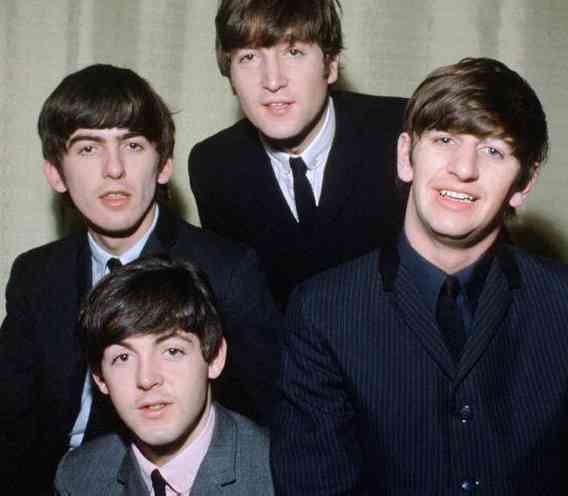
Did The Beatles Cheat?

beatles_01.jpg

In the beginning, all music was live.

But since 1877, thanks to Thomas Edison, we’ve had sound recording. By the turn of the century, musicians could play in front of a microphone or two, and their performance would be captured, preserved and reproduced. People anywhere could listen to a singer or a band any time they wanted, by playing a record on their phonograph. Sound recording wasn’t considered an art form. The sole purpose of recording was to faithfully capture a live performance. Though the technology improved greatly over the first half of the 20th century, the role of recording remained the same.

In 1947 jazz guitarist Les Paul released a recording of himself playing 8 different guitar parts. This was the first known “multi-track” recording, and was made by recording onto wax discs. In the 50s, Buddy Holly would record a rhythm guitar track on one tape recorder, then play it back and play a lead guitar part along with it (or sing harmony w/ himself), recording both onto a second tape machine.

When the Beatles recorded their first albums in the early 60s, they were basically traditional recordings, in the sense that they would rehearse their parts and then perform them together live in the studio. Over then next few years they began using the new 4-track tape machines, that allowed them to add other tracks later, played either by themselves or other musicians. And they could adjust the mix (the relative volumes of instruments) after they were recorded. So they had more control over the recording process, but the goal was still to record something that sounded like a live performance, even if it wasn’t.

By the time they recorded Sgt. Pepper in 1967, and Abbey Road in 1969, everything had changed. The Beatles, along with their producer George Martin, were using the studio not just to capture their performances, but as a creative tool in itself. They recorded tracks backwards, or at faster and slower speeds. They cut up the tapes they had recorded and pieced them back together out of sequence. They layered tracks, both musical and otherwise, creating dense soundscapes that would be difficult, if not impossible to recreate in a live performance.

Were they cheating?

I ask this in the context of other discussions that have taken place here on A&P, about painters looking at photographs, or projecting photographs, or printing photographs on canvas. I ask it in the context of comments I’ve read elsewhere by photographers. About whether a photo composed in the camera is more legitimate than one that’s been cropped, or whether one that’s printed in a darkroom is more legitimate than one printed digitally, or whether the more an image is manipulated in Photoshop the less “true” it is.

I should mention that things in the music world, as I’m sure you know, have come a long way since the Beatles’ explorations. The number of tracks on tape recorders went up from 4 to 8, to 24 then 48, and at this point, with digital recording, are practically infinite. Drum tracks can be generated entirely in the computer, as can many other musical parts. Sounds can be sampled from the real world, or from other records, then used within a new recording. You can buy prerecorded loops of sounds (drum beats, bass parts, etc.) and use them in your projects. You can record the tracks for a song, then go back and correct out-of-pitch vocals, speed up or slow down tempos of individual tracks, and cut and paste sections from one part of the song to another, squashing and stretching them to fit. The same kinds of issues we discuss for visual art are also debated among musicians and music fans.

So where do you draw the line? When is it real art, and when is it cheating?

New style, an experiment or just a passageway?

Fado

Tittle: Fado
Medium: Oil on canvas
Dimensions: 76x61cm

Visual Clues

interior grouch

Unholy Ghost (Interior View Grouch) 2004 Oil on canvas 12 x 16 inches

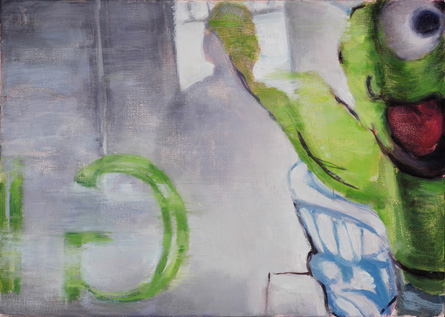
I thought for my first post I’d just get reactions to this painting.  It is one of the first in an ongoing series of paintings that seem to be teetering between representation and abstraction. 

I was thinking along the lines of a thread from a little while ago when we were talking about the meaning behind Colin’s photo of the hands.  I mentioned “visual clues,” and David thought that a discussion of that idea could be a post by itself.  Are there clues in this piece that help you make sense of it?  Or make you look more?  I will be working most of the day tomorrow, but will respond when I can… 

Statement of Purpose

050216-8-450.jpg

One of the more valuable (to me) artworks in my studio is a linoleum print made by Dan Cautrell, a artist I admire a lot and know just a bit. The print reads

Statement of Purpose

I do the work because I want to.
I do the work because I like to.
I do the work because I know how.
I do the work to explore myself.
I do the work to engage others with thought, word, and deed.
I do the work because I have something to say.
I do the work because I have seen something beautiful.
I do the work because I have seen something ugly.
I do the work to be the kind of person I want to be.
I do the work to earn money.
I do the work to stay when I must go.

=cautrell

The print hangs right by the studio door, so I can see it and be reminded by it every time I enter or leave the studio.  One of the reasons this is a favorite of mine is that it so neatly captures how our reasons for making art can be different at different times.  You don’t always have to be working on something for the same reason.  I’ll bet I’ve done work for every single one of the reasons Dan has listed; lots of times, I’ve done work for several of these all at once.

I know that, for me, the act of writing things down seems to make them more real.  I’ve often wondered what effect making these prints (mine is numbered 73 of 200) has had on Dan.  It’s an interesting reminder that making art has concrete effects in both the lives of the art-makers and lives of the people who end up living with the art day to day.

Using Photographs for Painting

This is my first post on A&P so hopefully I don’t make too many mistakes. Below is a post that I made earlier this year at Art News Blog. It’s an issue that all painters have to have an opinion on sooner or later, so I thought I would see what people here thought about using photographs.

Here’s the post..

The ARTnews magazine has asked a question that has been around for a while now.. “Why should a painting based on a photograph be considered a less legitimate work of art than one painted from observation or one that is simply abstract?”
Everyone from Edgar Degas through to David Hockney does it, so why do artists sometimes hide the fact that they paint from photographs?

I think it’s because of the romantic idea of an artist sitting in the landscape or in front of the model, trying to capture the life of the subject before them.

It’s like replacing wine corks with screw caps. Easily twisting a new cap off a wine bottle is just not as romantic as using a corkscrew to to get the old cork out of the bottle of fine wine. Even though the new screw caps prevent the wine from ever going bad, they’re just not as cool as a cork.

That analogy probably isn’t the best one, but the fact is that photographs are a great tool for artists. I know I don’t advertise the fact that I use photographs to paint, but I also don’t hide it. It just makes sense. Especially if you work in oils and build your paintings up over several weeks or months. It’s not going to be very practical to plonk your giant canvas on the sidewalk in a big city everyday for two months if you paint cityscapes.

The thing that I can’t understand is artists using projectors to trace a photograph onto the canvas. Not because the finished work would look like a photograph, but because it takes all the fun out of creating the work in the first place. I can’t see why someone would waste their time on such an activity.

Slides and Prejudice
Over the last few years, artists have made increasing use of Photoshop. Eric Fischl, for example, who is best known for his voyeuristic, psychologically charged paintings of amorous couples, employs it to collage together different images until they register as something he wants to paint. “I am part of a generation that was schooled in the belief that discovery and execution should occur simultaneously on the canvas,” he says. “For nearly 25 years I had held on to that belief, feeling that were I to know what I wanted to paint before I discovered it, the painting would lose its vitality. When I began working in Photoshop, essentially separating the discovery process from the execution, I feared it would kill the painting. What I discovered instead was that it freed me to explore painting itself.” ARTnews

The conversation at artnewsblog started here and continued on here.

css.php